Achilles Tendinopathy: Why the Right Diagnosis Matters
By Geoff Scott, Founder & Senior Physiotherapist, Hauora. 30 September 2026
Achilles tendinopathy is far more common than most people realise. Research estimates a lifetime incidence of around 6% in the general population, but that figure climbs dramatically among runners, with a cumulative lifetime incidence of up to 52% in endurance athletes. It’s one of the most frequently seen overuse injuries in sports medicine clinics, and for a significant proportion of those affected, it isn’t a short-lived problem: studies show that between 25% and 60% of people with Achilles tendinopathy still have symptoms five to ten years later.
That last statistic is the one that matters most. Achilles tendinopathy has a real tendency to become chronic, not because it’s an especially stubborn condition by nature, but because it’s so often mismanaged in the early stages. Generic advice, blanket rest, or a one-size-fits-all exercise sheet handed out without a proper assessment can leave the tendon undertrained, overtrained, or loaded in the wrong way entirely. Getting the initial diagnosis and treatment plan right is, by a wide margin, the single biggest factor in how quickly and completely someone recovers.
Why we treat every case individually
At Hauora, we don’t run a standard “Achilles protocol.” Tendinopathy presents differently from patient to patient. Insertional versus mid-portion involvement, the specific loading history behind it, other biomechanical contributors further up the chain, and each patient’s own tolerance for pain and capacity for training all shape what the right plan looks like. Our approach starts with a detailed clinical assessment and, where appropriate, diagnostic imaging to confirm exactly what we’re dealing with before any treatment begins. From there, we build a programme around that individual, not a generic template, and we adjust it as their tendon responds.
What the latest evidence tells us about rehabilitation
Tendon rehabilitation has evolved considerably over the past decade, and we keep our practice aligned with where the research actually points:
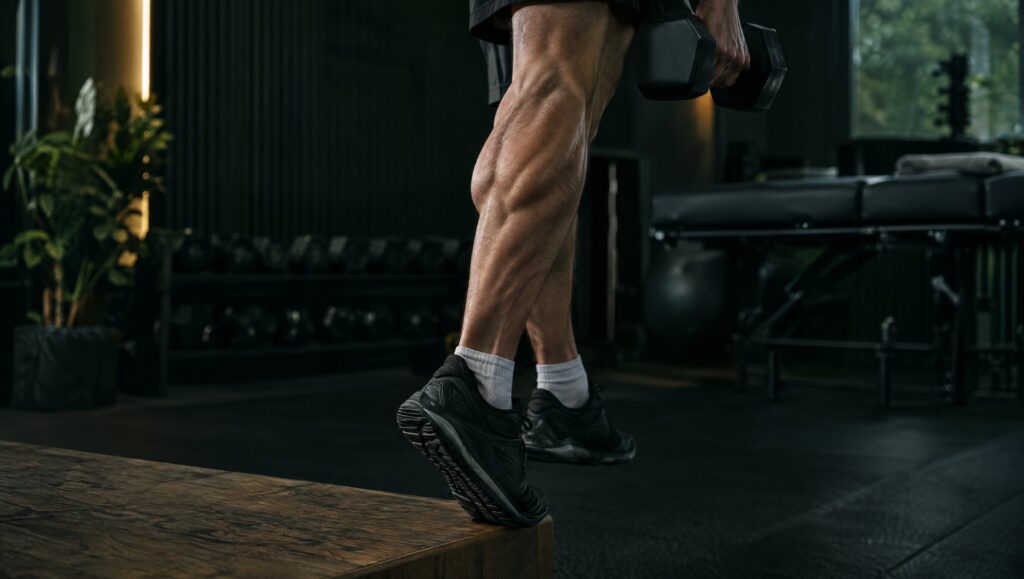
Progressive loading remains the foundation. Eccentric loading (the Alfredson protocol) was long considered the gold standard, with reported success rates of 60–80%. But more recent evidence has shifted the picture. Heavy Slow Resistance (HSR) training, controlled, weighted movements through a full concentric and eccentric range, typically using a 3-second lift and 3-second lower, has been shown in randomised controlled trials to produce outcomes at least as good as eccentric-only training, with meaningfully better patient compliance and satisfaction. For a demanding, months-long rehabilitation process, a programme patients can actually stick with matters as much as the loading stimulus itself.
Isometric loading has a role early on. For irritable, highly painful tendons, brief isometric holds can reduce pain in the short term and help patients tolerate the loading programme that follows, without the same flare-up risk as more dynamic exercise.
Tendon neuroplastic training (TNT) is an emerging area worth watching. Chronic tendon pain isn’t purely a tissue problem: there’s growing evidence of central nervous system sensitisation contributing to persistent symptoms. Combining HSR-style loading with attention-based and pain-education strategies is showing promise for patients who haven’t responded to loading alone.
Adjunctive treatments are exactly that: adjuncts. Shockwave therapy, blood flow restriction training, and other modalities can support a rehabilitation programme in the right context, but none of them replace the core requirement: a well-structured, progressively loaded exercise programme tailored to the individual.
Summary
Achilles tendinopathy responds well to the right treatment, but “the right treatment” looks different for every patient, and getting an accurate diagnosis and a properly structured plan from the outset is what separates a straightforward recovery from years of recurring pain. That’s the standard we hold ourselves to at Hauora: assess thoroughly, follow the evidence, and build the plan around the person in front of us.
If you’re dealing with persistent Achilles pain, get in touch with our team. Early, accurate assessment is the best investment you can make in your recovery.
Come and visit us here at Hauora for expert, evidence-based assessment and treatment of any tendinopathy-related condition. Our team will get to the root of your pain with a personalised plan built around your specific diagnosis and goals. Expert physiotherapy in the heart of Primrose Hill.
Book your Achilles assessment →
Hauora is an elite physiotherapy and performance clinic at At The Core, 44 Gloucester Avenue, Primrose Hill, London NW1 8JD. Book an assessment or call 020 4541 8924.