Lower back pain treatment: expert physio in London
By Geoff Scott, Founder & Senior Physiotherapist, Hauora
By Geoff Scott, Senior Physiotherapist and founder of Hauora, former Head of Medicine and Sports Science at Tottenham Hotspur. Reviewed by Jason Oliveira, Senior Physiotherapist. Published 19 November 2026.
What is the best treatment for lower back pain?
For most people, the best treatment for lower back pain is a clear diagnosis, staying active, and an exercise programme tailored to you that builds strength and confidence, with hands-on treatment to ease pain along the way. Bed rest and routine scans rarely help. Most new episodes improve markedly within six weeks, and the right plan helps stop them coming back.
Hauora is a sports physiotherapy and rehabilitation clinic in Primrose Hill, London. We treat everyone with back pain: office workers, parents, gardeners, people in their seventies who want to keep walking, as well as runners, golfers, padel and tennis players, rowers and professional athletes. Whoever you are, we use the methods we relied on in elite sport to get you the best possible result: a precise assessment, measurable targets and a plan that builds your back up step by step. Patients come to us from St John’s Wood, Regent’s Park, Marylebone, Hampstead, Belsize Park, Camden, Swiss Cottage and across London.
Lower back pain at a glance
- It’s the world’s leading cause of disability. Lower back pain affected around 619 million people worldwide in 2020, and that’s projected to reach 843 million by 2050.
- Most people improve quickly. In a review of 33 groups of patients (11,166 people), average pain in new episodes fell from 52 to 23 out of 100 within six weeks. After that, improvement slows, which is why a plan matters if you’re not better by then.
- Scan findings are often normal ageing. Disc bulges show up in 30% of pain-free 20-year-olds and 84% of pain-free 80-year-olds, so a scan rarely explains your pain on its own.
- Exercise works. A Cochrane review of 249 trials and 24,486 people found exercise probably reduces pain in long-lasting back pain compared with no treatment, usual care or placebo.
- Hands-on treatment works best alongside exercise. NICE guidance in the UK recommends manual therapy only as part of a treatment package that includes exercise, and imaging only when the result would change treatment.
- The right exercise matters. In a trial of 312 people with back pain, those given exercises matched to their directional preference, a key part of the McKenzie Method, did better than those given generic or opposite exercises.
From elite sport to everyday back pain
In professional football, a back problem can stop a player training for weeks, so you learn to work fast and work precisely. You get an accurate picture early, settle the pain without losing fitness, and then rebuild the trunk and hips until the back can cope with everything a full season throws at it. You don’t move on to the next stage until the player passes the tests for it.
We bring exactly the same process to every patient at Hauora, whether your season is the school run, long days at a desk, a house move, a golf handicap or a marathon build-up. You don’t need to be an athlete to be treated like one.
What causes lower back pain?
Most lower back pain is what doctors call non-specific. That doesn’t mean nothing is wrong. It means there’s no single damaged structure that a scan can point to, and that sensitive tissues, stiffness, muscle guarding and how your nervous system is processing pain all play a part. Common triggers include:
- A sudden jump in load: lifting, moving house, a heavy gardening weekend or a new training block
- Long periods in one position, especially sitting, driving or flying
- Repeated bending, twisting or arching in sport, such as golf, padel, tennis, rowing, cricket and gymnastics
- Poor sleep, stress and low general fitness, which all lower how much your back can tolerate
- A previous episode that never fully rehabilitated
Types of lower back pain we treat
- Acute back pain and muscle spasm: the back that locks up after lifting or bending, often with difficulty standing straight.
- Disc-related pain and sciatica: back pain with pain, pins and needles or numbness travelling into the buttock or leg. See our full guide to sciatica.
- Facet joint pain: pain that’s often worse arching backwards, twisting or standing for long periods.
- Recurring back pain: episodes that keep coming back, which usually means capacity was never fully rebuilt.
- Back pain in sport: golfers, padel and tennis players, rowers, runners, cyclists and footballers. In young athletes who repeatedly arch and twist, such as fast bowlers, gymnasts and footballers, persistent pain when arching back can be a stress fracture in the spine (spondylolysis), which needs a careful assessment.
- Desk-related back pain: see our five fixes for desk back pain.
- Rehabilitation after spinal surgery, such as a microdiscectomy, working alongside your surgeon’s guidance.
What is the McKenzie Method?
The McKenzie Method, also known as Mechanical Diagnosis and Therapy (MDT), is a system for assessing and treating back and neck pain. It uses repeated movements and sustained positions to see how your symptoms respond, classifies the problem, and finds the specific exercises you can use to treat yourself. Our physiotherapists are trained in the McKenzie Method, and it’s central to how we assess and treat back pain, particularly disc-related problems and sciatica.
Robin McKenzie and the story of Mr Smith
The method was developed by New Zealand physiotherapist Robin McKenzie. In 1956, at his clinic in Wellington, a patient known as Mr Smith, who had pain from his back down to his knee, lay face down on a treatment table whose head end had been left raised. It arched his back for several minutes, a position thought at the time to be harmful. When he stood up, the pain in his leg had gone and was only in his back. McKenzie called this centralisation, and it led him to study how specific repeated movements change pain. He went on to found the McKenzie Institute International in 1982 and wrote the best-selling book Treat Your Own Back. Like Geoff, McKenzie trained as a physiotherapist in New Zealand.
The key ideas behind McKenzie
- Repeated movement testing. We ask you to repeat specific movements, such as bending backwards lying face down, bending forwards or gliding your hips to one side, and we watch closely how your pain changes during and after.
- Directional preference. Many people have one direction of movement that eases their pain. Finding it gives you a treatment you can use straight away.
- Centralisation. When leg or buttock pain retreats towards the middle of your back, it’s a good sign, even if the back itself is still sore. It tells us we’re moving in the right direction.
- Classification. Problems are grouped into derangement, dysfunction, postural syndrome or other, and each needs a different plan.
- Self-treatment. You leave with one or two exercises to do through the day, so you can control your pain yourself rather than relying on us.
What the evidence says about McKenzie
A 2018 review of randomised trials found that in long-lasting (chronic) lower back pain, MDT reduced pain and disability more than other rehabilitation approaches, while in new (acute) back pain it wasn’t clearly better than other good treatments. That’s why we use McKenzie as a precise assessment tool and a powerful self-treatment, inside a wider plan that also rebuilds strength and fitness.
How we assess your back at Hauora
- Your story and a safety check. How it started, what eases and aggravates it, your work, sport and sleep, and a careful screen for the rare signs that need a doctor urgently.
- McKenzie movement testing. Repeated movements and positions to find your directional preference and see whether your pain centralises.
- Nerve testing if you have leg symptoms: reflexes, strength and sensation, so nothing is missed.
- Strength and endurance testing. Trunk endurance, hip strength and the movements that matter to you, such as a deadlift or hinge pattern, a golf swing, a tennis serve or running.
- A clear diagnosis and plan. You’ll understand what’s going on, what to do today and how we’ll build you back up. We only arrange an MRI when the result would change your treatment, and when it’s needed, we can organise a scan or a spinal consultant’s opinion quickly.
Hands-on treatment for back pain
Skilled hands-on treatment can make a real difference early on, easing pain and stiffness so you can move and start exercising sooner. Depending on what you need, that may include spinal mobilisation, manipulation and soft tissue work. A review of 47 trials and 9,211 people found spinal manipulation had similar effects to other recommended treatments for long-lasting back pain. So we use hands-on treatment the way the evidence and NICE suggest: as part of a plan built around exercise, never instead of it.
Core strengthening and conditioning
Your core is more than your abdominal muscles. It’s the whole system of trunk and hip muscles that controls and protects your spine when you lift, twist, run and swing. A strong back isn’t one that never moves. It’s one that can tolerate load, in every direction, for as long as your day or your sport demands.
- Trunk endurance: bird dogs, side planks, dead bugs and back extensor holds, progressed until you can hold good positions for longer.
- Hip strength: glute bridges, split squats, step-ups and hip hinges, because strong hips take load off the lower back.
- Loaded strength: deadlift and squat progressions and loaded carries, so everyday lifting feels easy.
- Rotation control: anti-rotation and rotation work for golfers, padel, tennis and cricket players.
- Conditioning: walking, cycling, rowing and swimming to build fitness, which helps both pain and recovery.
Research hasn’t found one type of exercise that beats all others for back pain. Core strengthening, Pilates and general strength training were among the most studied in the Cochrane review. In our experience, the programme that works best is the one matched to your assessment, progressed every week and actually done, which is why our strength and movement coaching follows the same plan as your physiotherapy.
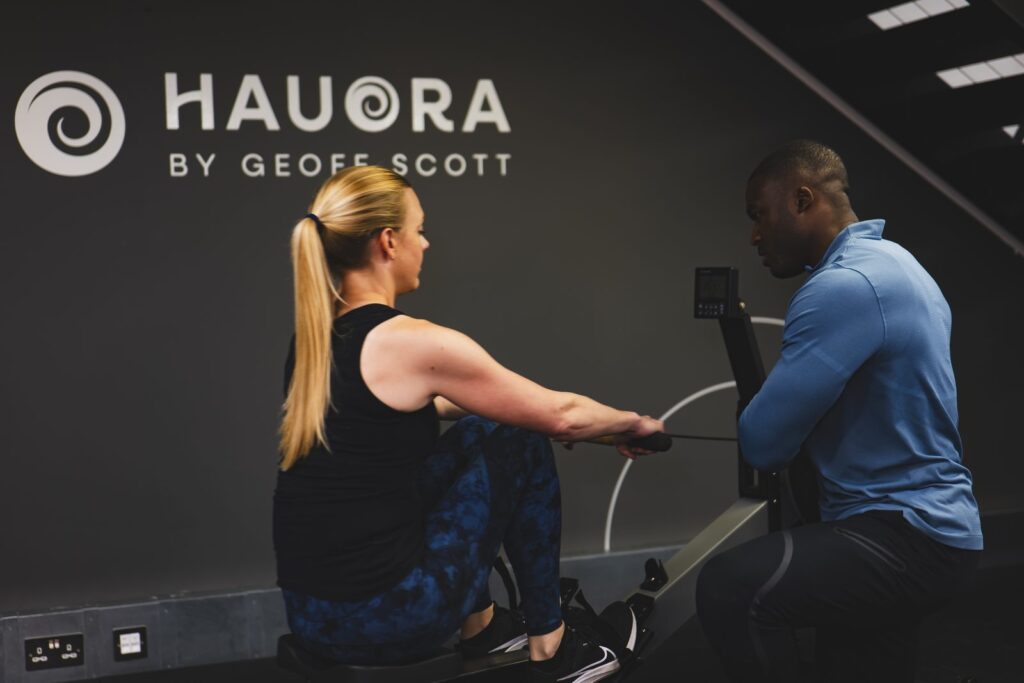
Our graded loading plan: building you back up as pain settles
This is the same staged approach we used to return players to full training. You move on when you pass each stage’s tests, not when a date arrives.
- Settle the pain. Your McKenzie exercises, hands-on treatment, comfortable positions, regular walking and advice on sleep and work. The aim is to keep you moving, not to rest.
- Restore movement. Get your back and hips moving fully again, so bending, twisting and getting up from a chair feel normal.
- Build capacity. Progressive trunk endurance and hip and leg strength, adding load week by week.
- Load it like your life and sport. Lifting, carrying, running, rotation and impact, then the specific demands of your job or sport, such as a full golf swing, serving, rowing or lifting your children.
- Back to everything, and staying there. You’ve passed your movement, strength and endurance targets, and you leave with a short maintenance routine to keep twice a week.
How long does lower back pain take to get better?
Most new episodes improve markedly within the first six weeks, and many people are close to pain-free within a few months. People whose pain has already lasted longer still improve, but more slowly, which is why we recommend getting assessed if you’re not clearly better within two to six weeks, or sooner if you have leg symptoms. After your first appointment, we’ll give you a realistic timeframe based on your assessment.
Top tips for a healthy back, from elite sport
- Keep moving. Gentle activity and walking help more than bed rest.
- Find your direction. If one movement eases your pain, use it little and often through the day.
- Strength train twice a week. Trunk and hip strength is your back’s best protection.
- Build load gradually. Big jumps in lifting, gardening or training are a common trigger, so add a little at a time.
- Change position often. At a desk, move every 30 to 45 minutes. The best posture is your next one.
- Trust your spine. It’s strong and designed to bend. Fear and avoiding movement tend to keep pain going for longer.
- Sleep and recover. Poor sleep makes pain worse. Read why you can’t out-train bad sleep.
- Finish your rehab. Keep your strength work going after the pain has gone, because pain stopping is not the finish line.
When is back pain an emergency?
Go to A&E straight away if back pain comes with numbness around your genitals or back passage, new problems controlling your bladder or bowels, or weakness or numbness in both legs. These can be signs of cauda equina syndrome, which needs emergency treatment.
See a doctor urgently if you have back pain with a fever or feeling unwell, unexplained weight loss, a history of cancer, severe constant pain at night, pain after a significant fall or accident, or a leg or foot that’s getting weaker.
How we treat lower back pain at Hauora
- Elite-sport experience. Geoff Scott spent two decades leading medicine and performance at Tottenham Hotspur and Nottingham Forest, where his department delivered the best player availability of the Premier League’s top six clubs for five consecutive seasons, verified by an independent audit. He also holds a Diploma in Orthopaedic Medicine.
- Senior physiotherapists only. You’ll be seen by an experienced senior physiotherapist, such as Jason Oliveira, who spent seven years as a senior physio at Saracens.
- McKenzie-trained, with hands-on skills and strength and conditioning expertise under one roof.
- One team, one plan. Physiotherapy, strength coaching and nutrition working together, with fast access to spinal consultants and scans when you need them.
- Time to do it properly. 45-minute physiotherapy sessions, or 90-minute Hauora+ athlete sessions.
- Honest advice. If physiotherapy isn’t the right answer for you, we’ll tell you and point you to the right specialist.
How much does back pain physio cost in London?
Prices vary between clinics. At Hauora, a 45-minute physiotherapy assessment or session is £155, and a 90-minute Hauora+ athlete session is £250. You don’t need a GP referral. Insured? We’ll help you claim. If you’re claiming on health insurance, check with your insurer first, as some ask for a GP referral. See all our fees.
Frequently asked questions
Should I rest or keep moving with lower back pain?
Keep moving. Gentle activity, walking and staying at work where you can help recovery more than bed rest. Avoid only what clearly makes the pain much worse, and get assessed if it isn’t improving within a couple of weeks.
What is the McKenzie Method?
The McKenzie Method, or Mechanical Diagnosis and Therapy, is an approach to back and neck pain developed by New Zealand physiotherapist Robin McKenzie. It uses repeated movements to find which direction eases your pain, then gives you specific exercises to treat yourself.
Is the McKenzie Method good for a slipped disc?
It’s often very useful for disc-related back pain and sciatica, because many people have a direction of movement that eases their pain and brings leg pain back towards the spine. We use it within a wider plan that also rebuilds strength.
Do I need an MRI scan for lower back pain?
Usually not. Scans often show changes such as disc bulges that are common in people without pain. We arrange an MRI when there are worrying signs, when you’re not improving as expected, or when the result would change your treatment.
Does manipulation or hands-on treatment help back pain?
It can ease pain and stiffness in the short term and help you move sooner. The evidence shows it works best as part of a plan built around exercise, which is how we use it.
What are the best exercises for lower back pain?
There’s no single best exercise. The best programme matches your assessment, usually starts with movements that ease your pain, then builds trunk endurance, hip strength and loaded strength, progressed every week.
How long does lower back pain last?
Most new episodes improve markedly within six weeks. Pain that has lasted longer usually improves more slowly, and a structured strength and loading plan helps it settle and stop coming back.
When should I go to A&E with back pain?
Go straight away if you have numbness around your genitals or back passage, new bladder or bowel problems, or weakness or numbness in both legs. These can be signs of cauda equina syndrome.
Related reading: sciatica: causes, treatment and recovery, back and neck pain physio in Primrose Hill, desk back pain: five fixes, strength training after 40, running physio and sports physio in London.
Back pain physio in Primrose Hill, St John’s Wood, Regent’s Park and Marylebone
Whether your back has just gone or has been troubling you for years, book an assessment at Hauora, an independent physiotherapy clinic at 44 Gloucester Avenue, Primrose Hill, London NW1 8JD. We’re about five minutes’ walk from Chalk Farm station, close to Camden Town, and easy to reach from St John’s Wood, Regent’s Park, Marylebone, Belsize Park, Swiss Cottage, Hampstead, Kentish Town and Maida Vale. Request an appointment online at hauora.com/book, call 020 4541 8924 or email contact@hauora.com.
This article is general information, not a diagnosis. If you’re injured or unwell, see a doctor or physiotherapist.
Sources
- Ferreira ML, et al. Global, regional, and national burden of low back pain, 1990-2020, its attributable risk factors, and projections to 2050. The Lancet Rheumatology, 2023
- NICE. Low back pain and sciatica in over 16s: assessment and management (NG59), updated July 2026
- da C Menezes Costa L, et al. The prognosis of acute and persistent low-back pain: a meta-analysis. CMAJ, 2012
- Wallwork SB, et al. The clinical course of acute, subacute and persistent low back pain: a systematic review and meta-analysis. CMAJ, 2024
- Brinjikji W, et al. Systematic literature review of imaging features of spinal degeneration in asymptomatic populations. American Journal of Neuroradiology, 2015
- Hayden JA, et al. Exercise therapy for chronic low back pain. Cochrane Database of Systematic Reviews, 2021
- Rubinstein SM, et al. Benefits and harms of spinal manipulative therapy for the treatment of chronic low back pain: systematic review and meta-analysis. BMJ, 2019
- Lam OT, et al. Effectiveness of the McKenzie Method of Mechanical Diagnosis and Therapy for treating low back pain: literature review with meta-analysis. Journal of Orthopaedic and Sports Physical Therapy, 2018
- Long A, Donelson R, Fung T. Does it matter which exercise? A randomized control trial of exercise for low back pain. Spine, 2004
- McKenzie Institute New Zealand. The McKenzie Method: how it all began