Pre and post-surgery physio in London: prehab and rehab
By Geoff Scott, Founder & Senior Physiotherapist, Hauora
By Geoff Scott, Founder and Senior Physiotherapist of Hauora. Published 28 November 2026.
Do you need physio before and after surgery?
Yes, for most orthopaedic operations. Physio before surgery, called prehab, gets you stronger and moving better before the operation. Physio after surgery protects the repair and then rebuilds strength, movement and confidence, step by step. Surgery fixes the structure. Good rehabilitation decides how well you come back.
At Hauora, At The Core, 44 Gloucester Avenue, Primrose Hill, London NW1 8JD, senior physiotherapists with elite-sport experience run prehab and rehab for knee, hip, shoulder, ankle and spine surgery. We follow your surgeon’s protocol, and patients referred by a surgeon or GP are seen within 48 hours. Patients come to us from Primrose Hill, St John’s Wood and Regent’s Park, Marylebone, Hampstead, Camden, across north London and further afield, after operations at London’s NHS and private hospitals.
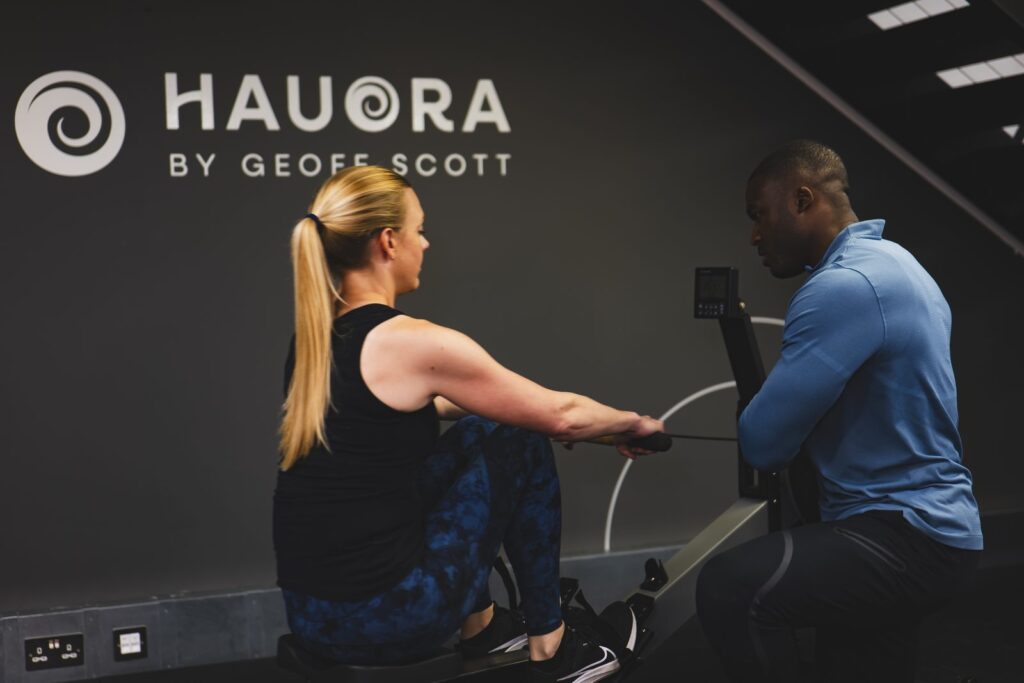
Pre and post-surgery physio at a glance
- What it is: prehab in the weeks before your operation, then rehab from the first days after it until you’re back to work, daily life or sport.
- Who you see: a senior physiotherapist with experience in Premier League football or professional rugby, such as founder Geoff Scott or Jason Oliveira.
- Your surgeon’s plan comes first: we follow their protocol and precautions, and contact them promptly if anything concerns us.
- Quick start: patients referred by a surgeon or GP are seen within 48 hours. Your surgeon gets a written report at the first major milestone of your rehab.
- Early weeks at home: if travelling is hard, Jason can visit you at home in N1, NW3 and NW6.
- Cost: a 45-minute appointment is £155. Many patients claim back the cost on health insurance.
- Why timing matters: NICE recommends that rehab after hip, knee or shoulder replacement starts on the day of surgery or within 24 hours, and that people listed for a hip or knee replacement get advice on prehab (NICE NG157).
What is prehab, and does it help?
Prehab, short for prehabilitation, is exercise-based physiotherapy in the weeks before an operation. The aim is simple: go into surgery as strong, mobile and well prepared as you can, so the recovery afterwards starts from a better place.
The evidence is encouraging. A 2022 review of 16 trials found that prehab improved knee function before a knee replacement and for up to three months afterwards, although the certainty of the evidence was low (JOSPT, 2022). A 2025 analysis of 21 trials found less pain at one, three and six months after knee replacement with prehab, but no change in time spent in hospital (Frontiers in Medicine, 2025). Before ACL reconstruction, a longer period of preoperative rehab was linked with better knee function two years after surgery (Failla et al., 2016).
What does prehab involve?
- Strength: especially the muscles around the joint, such as the quadriceps before knee surgery and the hip muscles before a hip replacement.
- Movement: getting the range back that the injury or arthritis has taken. Before ACL surgery, that means full knee straightening and settled swelling.
- Practice: learning the exercises you’ll do in the first days after surgery, and how to use crutches safely, while you’re pain-free enough to learn them well.
- Preparing your home: stairs, bathroom, bed height and what you’ll need within reach.
- General fitness and nutrition: keeping your heart, lungs and the rest of your body strong. Our performance nutritionist, Dr Emma Tester, can help with eating for recovery.
What happens in rehab after surgery?
Healing time is healing time. A graft, a repaired tendon or a new joint needs a set amount of time to heal, and nobody can rush that. What we can do is make sure no time is lost along the way. We work around the healing so that strength, control and balance are as good as they can be at every milestone, and there’s no catching up to do at the end.
Every operation and every surgeon’s protocol is different, but most rehab moves through five stages:
- Protect and settle: the first days and weeks. We manage pain and swelling, look after the wound, follow your surgeon’s precautions and start the movement that’s safe straight away.
- Restore movement and control: getting the joint moving fully again and switching muscles back on, with the right amount of load for the stage of healing.
- Rebuild strength: progressive gym-based strengthening, with our strength and conditioning coach Tunde Adewunmi when you’re ready, in the gym on site.
- Return to activity: running, sport, heavy work or whatever you want to get back to, guided by testing rather than the calendar. See return-to-sport testing.
- Stay strong: a plan to keep the gains and lower the risk of another injury.
We measure progress at each stage, such as range of movement, strength and how well you hop, land or balance, so decisions are based on what your body can do, not on how many weeks have passed.
Which operations do we help people recover from?
ACL reconstruction
ACL rehab is where good physiotherapy matters most. In one well-known study, the risk of reinjury fell by 51% for each month that return to sport was delayed, up to nine months after surgery (Grindem et al., 2016). Athletes who returned to sport without passing six clinical discharge criteria had about four times the risk of rupturing their graft (Kyritsis et al., 2016). Read our full guide to ACL rehab in London.
Meniscus repair and meniscectomy
Rehab after a meniscus repair is slower and more protective than after a trimming (meniscectomy), because the repair needs time to heal. We also help many people avoid surgery altogether. See meniscus tear physio.
Knee replacement
The first weeks are about bending and straightening the knee, walking well and managing swelling. After that, strength decides how well you climb stairs, garden or get back on the golf course. See physiotherapy after knee replacement.
Hip replacement, including the anterior approach
We help you get walking normally, without a limp, and rebuild the hip muscles that support the new joint, within your surgeon’s precautions. See anterior hip replacement prehab and rehab and hip pain physio.
Rotator cuff repair and other shoulder surgery
Shoulder rehab follows a careful timeline of sling, assisted movement, active movement and then strength. Research comparing early and delayed movement after rotator cuff repair has found similar re-tear rates overall, although larger tears may do better with a slower start, so we follow your surgeon’s protocol closely (Saltzman et al., 2017). Jason Oliveira, our shoulder specialist, leads much of our shoulder rehab. See rotator cuff rehab and shoulder pain physio.
Hamstring repair
Rehab after a hamstring repair protects the reattached tendon first, then rebuilds strength and speed in careful stages. See hamstring physio and repair rehab.
Achilles tendon repair
After an Achilles repair, the tendon is protected in a boot while it heals, then loaded gradually until you can rise on your toes, run and jump. See Achilles tendon injury.
Spinal surgery
After lumbar disc surgery, such as a microdiscectomy, exercise programmes starting four to six weeks after the operation seem to reduce pain and disability faster than no treatment, although the evidence is low quality (Cochrane review, 2014). Our physios are trained in the McKenzie Method. See lower back pain treatment.
Other operations
We also see patients after ankle ligament repair, shoulder stabilisation, hip arthroscopy, fracture fixation and other orthopaedic surgery. If you’re not sure whether we can help, call us and ask.
How do you work with my surgeon?
Closely. Your surgeon’s protocol and precautions come first, and we contact them promptly if anything concerns us, such as a wound problem, unexpected swelling or progress that stalls. When your surgeon or GP refers you, you’re seen within 48 hours, and they get a written report at the first major milestone of your rehab.
Surgeons, GPs and sports physicians can refer patients online at hauora.com/refer, by email to contact@hauora.com or by phone on 020 4541 8924.
Why choose Hauora for rehab after surgery?
- Senior physios only: you’re seen by a senior physiotherapist with elite-sport experience every time.
- Elite-sport rehab, for everyone: founder Geoff Scott spent 20 years at Tottenham Hotspur, latterly as Head of Medicine and Sports Science, and is a member of the Premier League Medical Committee. Jason Oliveira spent seven years at Saracens and holds an MSc in Sports Physiotherapy from the University of Bath.
- Rehab, not just treatment: a gym on site and a strength and conditioning coach for the later stages, so you don’t have to find somewhere else to finish your rehab.
- Milestones, not guesswork: we test movement, strength and function before each step up.
- Help at home early on: home visits in N1, NW3 and NW6 for the first weeks if travelling is hard.
- The whole picture: nutrition for recovery with Dr Emma Tester, and the 90-minute Hauora+ session for athletes who need more time and support.
How long does rehab after surgery take?
It depends on the operation, your surgeon’s protocol, how you were before surgery and what you want to get back to. As a rough guide, most people need several weeks of rehab after keyhole surgery and several months after a joint replacement, ACL reconstruction or tendon repair. Returning to pivoting sport after ACL reconstruction usually takes at least nine months.
We give you milestones rather than dates, and explain at each appointment where you are and what comes next. Each of the guides above has a stage-by-stage timeline for that operation.
How much does pre and post-surgery physio cost?
- Physiotherapy assessment and treatment (45 minutes): £155
- Hauora+ session for athletes (90 minutes, with support outside clinic time): £250
- Strength and conditioning session (60 minutes): £150
- Home visit (60 minutes, N1, NW3 and NW6): £300
Using health insurance? Many of our patients claim back the cost of their sessions, including Bupa Global and AXA Global members. Cover varies by insurer and policy, so please check with yours before your first appointment. We’ll give you everything you need to make your claim. Home visits are not covered by health insurance. See fees and insurance.
Frequently asked questions
Should I have physio before my operation?
Usually, yes. Prehab builds strength and movement before surgery and teaches you the exercises you’ll need afterwards. Reviews of the research link it with better knee function and less pain after knee replacement, and better outcomes after ACL reconstruction.
How soon after surgery should I start physio?
Usually within days. For hip, knee and shoulder replacement, NICE recommends starting rehab on the day of surgery or within 24 hours. After other operations, we follow your surgeon’s protocol, and patients referred by a surgeon or GP are seen at Hauora within 48 hours.
Do I need a referral to see a physio after surgery?
No, you can book directly. We’ll ask for your operation notes and your surgeon’s rehab protocol, and we follow it. Surgeons and GPs can also refer you online at hauora.com/refer. If you’re claiming on health insurance, check with your insurer first, as some ask for a referral.
Can you follow my surgeon’s rehab protocol?
Yes. Your surgeon’s protocol and precautions come first. We keep in touch with your surgeon, contact them promptly if anything concerns us, and send a written report at the first major milestone of your rehab.
Can a physio come to my home after surgery?
Yes. Senior Sports Physiotherapist Jason Oliveira visits patients at home in N1, NW3 and NW6, Monday to Friday. A home visit is a full 60-minute session and costs £300. Home visits are not covered by health insurance.
How long does rehab take after ACL surgery?
Most people need nine to 12 months before returning to pivoting sports such as football, rugby or netball. Research shows the risk of reinjury falls for each month return to sport is delayed, up to nine months, and that passing objective tests before returning lowers it further.
Can I use my health insurance for physio after surgery?
Many of our patients claim back the cost of their sessions, including Bupa Global and AXA Global members. Cover varies by insurer and policy, so please check with yours before your first appointment. We’ll give you everything you need to make your claim.
How much does physio after surgery cost at Hauora?
A 45-minute physiotherapy appointment is £155. A 90-minute Hauora+ session for athletes is £250, a 60-minute strength and conditioning session is £150 and a 60-minute home visit is £300.
Related reading
- ACL rehab London: elite-sport ACL physio
- Physiotherapy after knee replacement
- Anterior hip replacement: prehab and rehab
- Rotator cuff injury: treatment and rehab
- Meniscus tear: physio, rehab and surgery
- Return-to-sport testing: how to know you are ready
- MSK physiotherapy in London
Pre and post-surgery physio in Primrose Hill, St John’s Wood, Regent’s Park and Marylebone
Request an appointment online at hauora.com/book or call 020 4541 8924. We confirm online requests by email or phone, usually within one working day. Clinicians can refer at hauora.com/refer.
You’ll find us at Hauora, At The Core, 44 Gloucester Avenue, Primrose Hill, London NW1 8JD, about five minutes’ walk from Chalk Farm and 10 minutes from Camden Town. We see patients from Primrose Hill, St John’s Wood, Regent’s Park, Marylebone, Hampstead, Belsize Park, Swiss Cottage, Camden and across London.
This page is general information, not medical advice. Always follow your surgeon’s instructions, and contact them or your hospital urgently if you have signs of infection, a clot or a sudden change after surgery.
Sources
- NICE. Joint replacement (primary): hip, knee and shoulder (NG157), 2020.
- NICE. Joint replacement (primary): hip, knee and shoulder. Quality standard QS206.
- Prehabilitation improves knee functioning before and within the first year after total knee arthroplasty: a systematic review with meta-analysis. J Orthop Sports Phys Ther 2022;52(11):709-725.
- Zhang W et al. Prehabilitation is effective in relieving pain after knee arthroplasty, but has little effect on length of stay and knee function. Front Med 2025.
- Failla MJ et al. Does extended preoperative rehabilitation influence outcomes 2 years after ACL reconstruction? Am J Sports Med 2016;44(10):2608-2614.
- Grindem H et al. Simple decision rules can reduce reinjury risk by 84% after ACL reconstruction: the Delaware-Oslo ACL cohort study. Br J Sports Med 2016;50(13):804-808.
- Kyritsis P et al. Likelihood of ACL graft rupture: not meeting six clinical discharge criteria before return to sport is associated with a four times greater risk of rupture. Br J Sports Med 2016;50(15):946-951.
- Saltzman BM et al. Does early motion lead to a higher failure rate or better outcomes after arthroscopic rotator cuff repair? A systematic review of overlapping meta-analyses. J Shoulder Elbow Surg 2017;26(9):1681-1691.
- Oosterhuis T et al. Rehabilitation after lumbar disc surgery. Cochrane Database Syst Rev 2014;(3):CD003007.