Hip pain
Hip pain can affect how you walk, sleep and exercise. The good news is that most hip problems respond well to the right plan.

Hip pain is not always felt in the hip itself. It can show up in the groin, the outside of the thigh or the buttock, and it is sometimes linked to the lower back. Common causes include tendon pain on the outside of the hip, early arthritis and groin strains. We find the source and build a plan that keeps you moving.
You might notice
- Pain on the outside of the hip, often worse lying on that side
- Groin pain when walking, climbing stairs or getting out of a car
- Stiffness after sitting or first thing in the morning
- Clicking or catching in the joint
- Limping or reduced walking distance
Common causes
- Tendon overload on the outside of the hip, common in midlife
- Osteoarthritis and age-related joint changes
- Muscle weakness around the hip and pelvis
- Sudden increases in walking, running or training
- Referred pain from the lower back
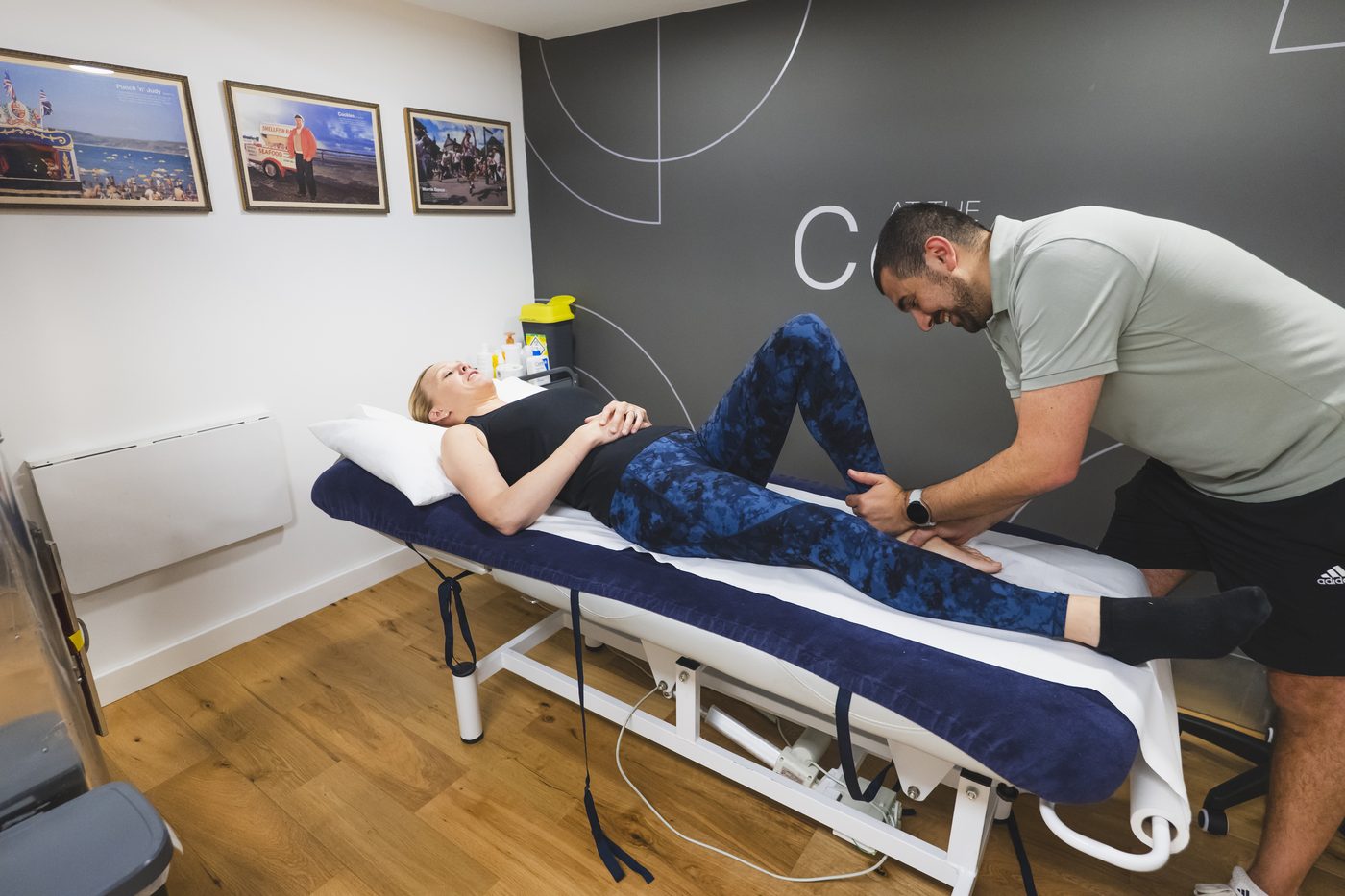
How we work on hip pain.
- 01
Settle the pain
Advice on load, sleep positions and sitting, plus hands-on treatment to ease pain and stiffness.
- 02
Assess the whole chain
Hip, pelvis and lower back together, because hip pain often has more than one source.
- 03
Strengthen
Targeted work for the glutes and hip muscles, one of the most effective treatments for hip pain.
- 04
Back to what you love
Walking further, running again or getting back in the gym with a clear plan.
- Assessment of the hip, pelvis and lower back together
- Hands-on treatment to ease pain and stiffness
- Targeted strengthening, which is one of the most effective treatments for hip pain
- Advice on sleeping, sitting and activity levels
- A plan to get you back to walking, sport or the gym
Hip tendon pain often improves over around three months with a consistent strengthening programme. Arthritis-related pain can be eased considerably with exercise and the right advice.
Elite-level care, on your case.
The people who have looked after Premier League footballers and Premiership rugby players will look after you. Same standards, same attention to detail, whatever brings you in.


Your first appointment.
01
We listen
Your first appointment lasts an hour with a senior physiotherapist. We start by understanding your symptoms, your history, your work and what you want to get back to.
02
We find the cause
A thorough hands-on assessment of how you move, so we treat the cause and not just where it hurts.
03
You leave with a plan
You will understand what is wrong, how long it should take, and exactly what to do next, including treatment and exercises to start straight away.
Good questions.
Is hip pain always arthritis?
No. Many people with hip pain have a tendon or muscle problem rather than arthritis. An assessment will tell you which it is.
Can exercise help hip arthritis?
Yes. Strengthening and staying active are recommended first-line treatments for hip osteoarthritis and help many people delay or avoid surgery.